
Urgent Advisory on Foraged Mushrooms: A Growing Concern
Recent Poisoning Cases
On Friday, the California Department of Public Health (CDPH) issued a critical advisory urging the public to refrain from consuming foraged mushrooms. This warning comes in the wake of confirmed amatoxin poisonings that have linked mushrooms, particularly the infamous death cap, to 21 reported poisonings, with one case tragically resulting in death. The risks associated with these wild fungi demand immediate attention.
The Danger of Death Cap Mushrooms
Death cap mushrooms, known scientifically as Amanita phalloides, are notorious for their toxicity and misleading appearance. These mushrooms can easily be mistaken for safe, edible varieties, making them particularly dangerous for amateur foragers. They thrive in forests near oaks and other hardwood trees, including pines, creating a deceptive environment for mushroom enthusiasts. The CDPH underscores that common cooking methods—such as boiling, drying, or freezing—do not eliminate the toxins present in these mushrooms.
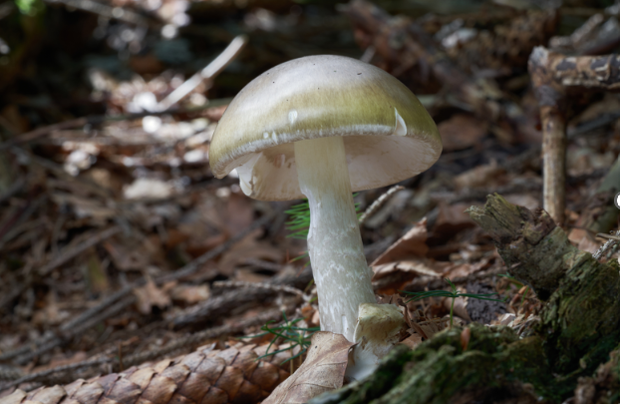
Death caps are typically found near hardwood trees and can be easily mistaken for safe mushrooms.
Cluster Reports and Geographic Spread
The poisonings have been clustered primarily in the Monterey area and the Bay Area, yet the CDPH warns that the risk is not confined to these regions. California’s rainy fall and winter months create ideal conditions for the growth of toxic mushrooms, making foraging perilous across the state.
Symptoms of Poisoning
Individuals who ingest death cap mushrooms may initially experience symptoms like watery diarrhea, nausea, vomiting, abdominal pain, and dehydration. These symptoms can arise six to 24 hours post-ingestion. It’s critical to note that while these symptoms might subside, this apparent recovery can be deceptive. Severe liver damage may develop within 48 to 96 hours, leading to life-threatening complications such as acute liver failure, which may require a transplant for survival.
Expert Recommendations
Dr. Erica Pan, Director of the CDPH, advises against all forms of wild mushroom foraging during this high-risk season. "Because the death cap can easily be mistaken for edible safe mushrooms, we advise the public not to forage for wild mushrooms at all," she stated. Instead, she emphasizes that the safest option is to purchase mushrooms from reputable stores or known commercial sources.
Conclusion
As foraging for wild mushrooms becomes increasingly popular, awareness of the associated risks is paramount. The alarming reports of poisonings serve as a crucial reminder of the unseen dangers that lurk in nature. By heeding expert recommendations and prioritizing safety, individuals can avoid the severe consequences that may arise from mistakenly consuming toxic mushrooms.